Key Takeaways
- Dry eyes and headaches often show up together, but one doesn’t cause the other.
- The two issues share similar roots, like long screen sessions, hormonal changes, and some medications.
- Dry-eye-like symptoms can sometimes have another cause, such as eye alignment or visual strain during prolonged near work.
- Cluster headaches can bring pain behind the eye, which can feel a lot like a visual symptom.
- Screen breaks, a humidifier, warm compresses, and water through your day can help soothe your eyes.
- An eye exam can look for the root cause of your dryness and guide a care plan built around you.
Dry Eyes & Headaches Have Similar Causes
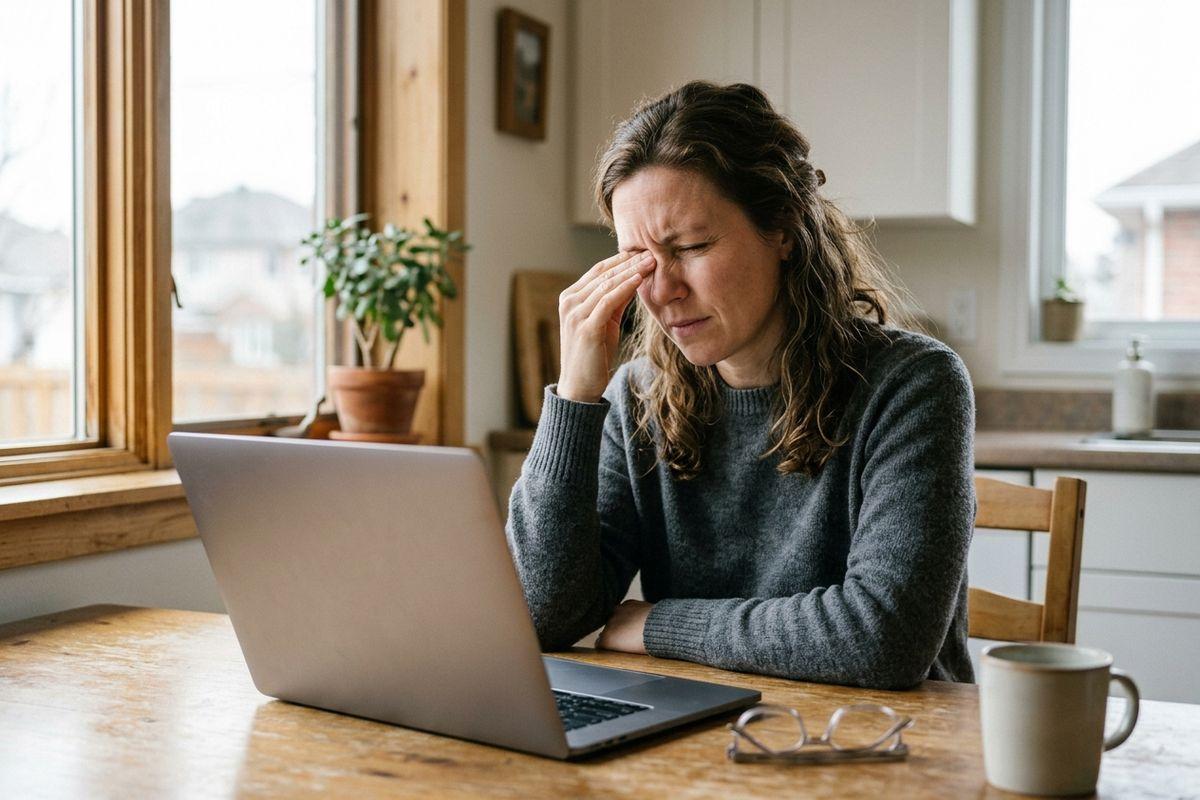
By mid-afternoon, your eyes feel gritty and a dull ache has settled in around your temples. You reach for eye drops, then a pain reliever, and wonder if the two conditions are connected. Our team at Island Eyecare hears this question often from busy moms and working women across Cape Breton.
Dry eyes don’t cause headaches, but the two often appear together because they have similar causes and triggers. Knowing what links them can help you find relief sooner, whether that means dry eye therapy or another kind of approach.
How Dry Eyes & Headaches Are Linked
You might notice that dry, tired eyes and headaches often appear together. That timing makes it easy to assume one leads to the other. However, they’re actually more like neighbours. Dry eyes and headaches have similar causes, so people who are prone to headaches are often also prone to dry eye. But dry eyes don’t bring on headaches, and headaches don’t dry out your eyes.
Researchers are still studying how the two connect. For now, a helpful path to relief is to look at what the two conditions have in common.
Signs of Dry Eye to Watch For
Dry eye can show up in ways you might not expect, and some of its symptoms overlap with headache pain. Common signs include:
- Your eyes burn, sting, or feel scratchy.
- Your eyes look red or feel gritty, like sand is caught under your lids.
- Your eyes water.
- You experience blurry vision that comes and goes.
When Dry Eye Symptoms Aren’t Actually Dry Eye
Sometimes, eyes can feel dry, tired, or uncomfortable even when an eye exam doesn’t show typical signs of dry eye. Prolonged near work, such as hours spent on a computer or phone, can put extra demand on the visual system. In some people, eye misalignment or difficulty coordinating the eyes at close distances may contribute to these symptoms.
This can involve the trigeminal nerve, which plays a role in how the eyes and surrounding areas sense discomfort. When the visual system is under strain, the resulting symptoms can feel similar to dry eye, including eye fatigue, discomfort, headaches, or a sensation of dryness.
For patients who have these symptoms but don’t have clear signs of dry eye, Neurolens may be worth exploring. Neurolens uses contoured prism technology designed to help the eyes align more comfortably, particularly during near tasks. For the right patient, this may reduce the visual strain and discomfort associated with prolonged near work.
If your eyes feel dry or tired but you’ve been told there are no obvious signs of dry eye, talk with your optometrist about whether eye alignment or a binocular vision issue could be contributing to your symptoms.
Shared Causes of Dry Eyes & Headaches
Screen Time and Eye Strain
Think about the last time you scrolled through recipes, answered work emails, or helped with homework on a laptop. People blink less when focused on screens, which reduces the rate at which the body is able to replenish the tear film on the surface of the eye. Long stretches of screen time can lead to digital eye strain, which includes both dry eye and headaches as symptoms.
Hormones, Medications, & Health Conditions
Hormonal changes, like those during pregnancy or menopause, can raise your risk of dry eye. Many women in their 30s, 40s, and 50s notice new dryness during these stages.
Some everyday medications can also play a role, including:
- Antihistamines for allergies.
- Antidepressants.
- Birth control pills.
Some health conditions, like Sjögren’s syndrome, are also associated with both dry eyes and headaches.

Simple Ways to Soothe Your Eyes at Home
A few small changes to your routine can help your eyes feel more comfortable. Try these simple habits:
- Follow the 20-20-20 rule by looking at something 20 feet away for 20 seconds every 20 minutes. This gives your eyes time to recover.
- Run a humidifier to add moisture to the air, especially once the furnace kicks on in fall.
- Rest a warm compress over your closed eyes for a few minutes every evening.
- Keep a water bottle nearby and sip throughout your day.
When to See Your Eye Doctor in Cape Breton
Signs It’s Time for a Visit
Home care helps many people, but sometimes it just isn’t enough. You should book a visit with your optometrist if you notice any of these signs:
- At-home care brings little relief, or the relief doesn’t last.
- Dry eyes and headaches keep showing up together.
- Your symptoms persist or worsen.
What Your Eye Exam Can Look For
During a dry eye exam, your eye doctor can check a few key areas:
- The health of your tear film and the surface of your eye.
- The root cause of your dryness.
- The details needed to build a care plan around your needs.
Knowing the root cause helps your eye doctor choose treatments suited to your eyes and your daily life.
Treatment Options Your Eye Doctor May Suggest
Your eye doctor can suggest treatments based on what your exam shows. Your care plan can include one option or a mix of options, including:
- Preservative-free artificial tears or medicated eye drops.
- Eyelid care products.
- Omega-3 supplements.
- In-office dry eye treatments like intense pulsed light (IPL).
Find Dry Eye Relief in Cape Breton
Gritty eyes and nagging headaches can make a busy day feel even longer. Our friendly team at Island Eyecare uses modern technology to take a close look at your eyes and help find what’s behind your discomfort, all right here in Cape Breton.
Book your dry eye exam with Island Eyecare today, and take the first step towards more visual comfort.